Industry: Medical devices; Brand building for startups
Location: Providence, RI
Read the Transcript
This transcript was AI-generated. Please excuse any typos.
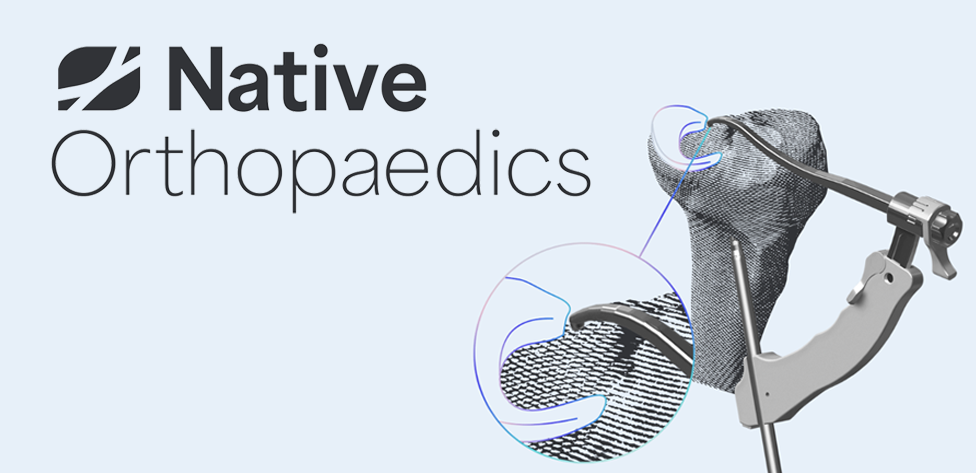
David: Today on The Angel Nest, we’re talking about startup brand building, and we’ve got a couple of great guests. They are fresh off their win being voted the top technology for cutting-edge innovation in the field of orthopedic sports medicine. They’re the architects of native orthopedics brand and what’s becoming pervasive through the sports medicine market.
It’s called the Dragonfly technology. Welcome back to another edition of The Angel Nest, where real angel investors and entrepreneurs partner to build great companies. I’m David Hemingway.
I’m a five-time founder. Now an active angel investor, and my mission here is to tell the stories that are powering innovation. Brian Morley worked as part of the Johnson & Johnson marketing team before going out on his own.
He’s now CMO at Native Orthopedics, and he’s building a brand around new technology that’ll help knee patients avoid future knee replacements. He’s partnered with Tino Chow. Tino’s the CEO and founder of Giant Shoulders.
That’s a strategic branding agency that focuses on medical technology, and their efforts have yielded some amazing results. Brian and Tino, thanks for being here today, guys. Yeah.
Tino and Brian: Thank you for having us. Yeah. Thanks, David.
David: Good to see you again. Great to see you. So my experience is that founders don’t always focus on the brand right away.
They’re thinking about raising investment or they’re thinking about selling the product, getting some numbers up on the scoreboard, but you both seem to think that’s a mistake.
Brian: Yeah. So I mean, I wouldn’t say it’s a mistake per se.
It’s all about sequencing of kind of where their focus lies. And I think if you look at brand as a muscle, you have to decide when to start building that muscle and then start to hone that muscle and then start to flex that muscle, I think kind of metaphorically speaking. So what’s important is not to ignore, just like in any kind of workout, not to ignore a muscle group.
You don’t all have to have the beach muscles ready, but you can’t ignore all the muscle groups if you really want to have a healthy core. So I think it’s the same thing with starting a company is that you can ignore it. It has to be something that you start to work on and start to build and strengthen.
And then if you do that over time and do all the little work over time, eventually you can start to flex that muscle. But if you just expect one day to all of a sudden to be able to do a pull up and you haven’t practiced for the last year, you’re not going to be able to do it. So I think that’s kind of more my mentality of if you expect it, you got to start building it very early.
David: I think sometimes founders don’t realize how important marketing is to their early stage investors. How can they position their brands so they can maximize the effectiveness of their fundraising?
Brian: Yeah, so this is something we are constantly wrestling with. I got some advice from a VC last year that says, the first thing you need to do is win the heart.
And the heart is, do I believe in this founder and do I believe this person will run through walls to solve the problem, to get this business right? Do I believe in this person? Are they high integrity? Are they truthful? Do they have a motor like anybody else and will they fight to win? So that’s the first part, the heart. Then there’s the gut. Does the technology make sense in the marketplace? If I just kind of think about it, is this a nice to have? Is this a need to have? So they’ll kind of decide based on their gut there.
And then the last part is the logic part of the brain. Does this make sense from a numbers perspective? So I invest X, I expect Y, they have projections, here’s their financial projections. Do all those things shake out? But they’re not gonna worry about the financial piece if they don’t trust the CEO and they don’t trust the technology.
So it’s really win the heart, win the gut, win the mind. And brand is, once again, a communication tool and it’s a shortcut to each one of those things. And not a shortcut in a deceptive way, but a shortcut so that you can communicate that quickly and effectively, because a lot of times you only have 60 seconds to communicate this.
And if you have 60 seconds, you gotta really, you gotta, how do you win a heart in 60 seconds and a gut in 60 seconds and a mind in 60 seconds? So that’s what I would say, suggest for the founders is kind of dimensionalize that. And what’s my story? How quick am I getting them that hook in 10 seconds, 30 seconds, 60 seconds? Yeah, and why that matters is because if you don’t brand yourself, others will. And really what that means is that if you don’t communicate all those three things, the heart, gut, and kind of mind, like Brian said, somebody is gonna make up their own minds of why you’re in this business, why you developed this technology and how it works and how this fits into the market.
And I can almost guarantee you that they are gonna come up with a different conclusion and most likely one that you do not like. So is investing in startup brands very different from a large company or are there lessons that startups can learn from the larger players like Johnson & Johnson that you worked for? Yeah, I think that’s definitely a big difference between kind of branding startups and bigger companies. And I’m sure Brian can tell you more about his experience coming from the corporate world.
But when it comes down to it, startups, we’re working with kind of smaller budgets. And also you, by definition as a startup, you have no credibility yet. So how do you command or really kind of, first of all, attract attention, command that attention, and then most critically is retain that retention.
Because being loud and attracting attention is one thing, but being able to draw people in and have something that’s valuable that you start building trust, that’s what great brand does. And it’s a little bit different kind of when you are a bigger player where you have the track record, you have a lot of experience, you have the name, and you are the safe choice and people come to you because of that. And actually, I would love to hear Brian’s kind of experience, you know, kind of going from J&J coming into the startup world.
So in the corporate world, you’re definitely bound by some controls. And usually in the corporate world, you launch a product, you’re either building off an existing portfolio or roadmap, and it’s iterative. So you have that foundation to kind of leap off of.
Or there are instances like what Globus did with the robot is creating a new market. So in the corporate world, you do have to either create a new market, and that’s a very specific skill set. And it kind of ties back to what Tino said, or you have the iterative Gen 1, Gen 2, Gen 3. So the majority of my experience that I’ve seen in the corporate world, it’s iterative, you’re building off of something that already exists.
And you both specialize really in startup brands. So for a founder who’s listening now, who’s trying to figure out, you know, what is the first step? What’s the first thing they should do? In order to tee themselves up to have an effective and a popular and a successful brand. So when I take a step back, most companies, most startups go through three phases.
You have the pre-commercial, then you have to go to market, and you have the growth. And typically, you have a pre-commercial, you’re in R&D. And it’s typically kind of led by a technical founder.
And I would say that kind of the brand that you need at that stage, oftentimes can revolve around kind of leveraging the founder’s story and narrative. That’s where the credibility comes from. It’s kind of the best stories that really can move the needle, especially for investors.
And David would love to kind of hear your thoughts on this, is we invest not just in technology, but in the person. We want to know how that this is their life’s work, or at least kind of they have poured their kind of blood, sweat, and tears into this technology, getting to where it is today. And if they meet any obstacles or kind of met with any opportunities, they would kind of maneuver to kind of to work around it to capture the opportunity.
And that’s kind of what we see in the best kind of entrepreneurs that we want to invest in. So yeah, so David, we’d love to kind of hear your thoughts on that. Well, that’s why it’s ironic that founders don’t focus on brand early enough, because the issue for investors is always, what is the moat? The good news is that anybody can build anything now.
The bad news is that anybody can build anything if you’re an investor, because you invested something you love and you really believe in, and then there are a hundred knockoffs. Right. So what makes it special? And I think Brian said to me once, it’s really about trust.
Yeah, I think when I look at back at your initial question of like how much brand and when to when to do it in the startup world, you have to have the pitch deck. Right. Everyone’s like, show me the pitch deck.
And the pitch deck has to be clear, compelling and concise. That’s really hard to do. You know, for example, with Native, we’ve been at this, I’d say, for two years and we’re still evolving our pitch deck, for example.
And what brand does, brand is just a tool to communicate, to communicate to the folks that you want to engage, whether it’s investors, its users, its collaborators, future employees. Right. So it’s a communication tool.
So if you start with brand early, what you’re doing is you’re learning how to communicate the value of you and your company and your vision and the product. And, you know, if you talk to the founders that they’re R&D based founders, whether it’s a clinician or an engineer, right, that came a technical founder, you ask them how many times they, how many design iterations they had on the product. You know, for Native, Dr. Chris Anderson spent six years iterating his technology, almost eight years actually iterating the technology.
And you should see it. It’s like hundreds and hundreds and hundreds of, of, of this implant iterations. Dyson did 4,000, 5,000 iterations before the Dyson ball came out.
So if you think about that, you know, of course I would iterate until I get the product perfect. Well, the brand I have the same mentality is you got to start, start early. Do you know, build your MDP and then iterate? Because what we’ve done with, with Native is we come to a, a solution of here’s the brand, here’s the story, here’s how we’re going to communicate it.
It solidifies. And then a couple of months later, it’s kind of like a metamorphosis. We got to like crack the shell off and create the new version of that.
And then a couple of months later, we crack the shell and create a new version of that. Right. So I look at, at brands similar to many of these technical founders look at their product of, we need to keep iterating and keep dialing this in and honing it in.
So it’s not one thing. So I’d say start early and be okay with the fact that you’re going to crack the shell off in three to six months and a new, a new, you know, butterfly will blossom. And then three to six months later, a new butterfly will blossom because it’s a communication tool.
It’s really hard to do well, but if you don’t have that kind of mentality of growth on the story, you’re going to be kind of locked in and you have a fixation mentality and you’ll never be able to attract the right people. If you don’t have that mentality of let’s keep, let’s keep getting it better and better. That’s really interesting.
So you’re saying building the brand is not a one-time exercise. And of course it makes perfect sense in, in the age of social media. And I’m curious how much social media governs what you guys do every day, because it seems like, you know, just the need to be constantly out there saying something compelling.
And, and do you want to be out there all the time or do you only want to be out there when you really have something to say? Uh, the battle for people’s attention is just incredible. I’ll take, uh, one of Tino’s stories of he’s used the term toothless before with us. And that’s like an internal thing to challenge people’s way of communicating the value and saying toothless.
So, you know, when you do these brand exercises, especially in like the corporate world, like go, go ahead and take a look at all, all these corporate companies and, and look at all their terms that they’re using, like innovative and ergonomic and reliable and improves this and better this and, you know, cost-effective cutting edge, best in class, unmet needs, right. They’ll just say all these toothless terms that I’m stealing to, and Tino can explain the toothlessness, but, um, so. In social media, you’ll see a lot of that because they’re easy terms to just to claim because they don’t, they don’t really mean anything.
Um, the challenge is there’s no, they don’t mean anything. And then if you get too specific, right, if you get too specific where it says we’re this much faster, this much stronger, this much in social media, if the audience doesn’t have the context, the specific claims don’t really mean anything. Um, so for us, you know, how we leverage social media is to provide context to the audience of where the problem is in kind of creative ways of delivering that problem statement, giving them the context and then giving them the specifics on, on the teeth of what are the teeth that we are, uh, we’re creating.
So, um, so what we do internally is anytime we see a story that, that, you know, we’ll, we’ll create a storyline, we’ll maybe draft some things and we look at it and it’s like all of our competition can say the exact same thing. We throw it out. Everyone else will do this.
We throw it out. So what we really think about in our, our social and all of our communication, social included, is let’s not just say everything that everyone else can say. Let’s really hone in on what makes us matter and the, and the difference we can make and get specific, but also we have to provide that context as well.
So it’s, it’s, uh, that’s kind of my, my thought on, on how to leverage social. Yeah. And I just want to kind of add to that too, is that, um, oftentimes when we look at communication, um, I think on one thing that, um, kind of as a startup, you have to ask yourself who you’re communicating to.
And I think, um, you know, going back to kind of Brian’s experience, like with Johnson and Johnson, uh, when you’re a big company, you’re competing at different level. You can command people’s attention, um, and easily attracted because you’re Johnson Johnson. So as a startup, you are communicating to a different group.
Um, often ones that are maybe more, uh, they’re willing to take a little bit more risk or they have this pain that’s so painful and no one else is solving it and they’re willing to listen to anyone. So when you kind of look at, um, kind of the specific audience, um, they’re, they’re most likely earlier doctors. They’re a little bit more, uh, willing to take a, take that risk.
And in order to speak to them, you have to speak differently than to the, to the majority, uh, to those who are, um, kind of more reset first. So, and when kind of, um, uh, when Brian mentioned kind of like the toothlessness is that when you get, when you speak to the majority where they are already, uh, kind of bought into those concepts, those unmet needs, those innovation, those are becomes safe terms. And in many ways, as we talked about as a startup, you don’t have a credit credibility yet, and you want to punch above your weight.
You want to cut through the noise. And this becomes a litmus test of, well, what is something that we can say, uh, that nobody dares to, uh, claim. And that is a way.
And that’s a way to attract that attention. And once again, you’re not attracting the attention of those who doesn’t want to take any risks. You’re attracting the specific attention, the attention of a specific audience for those who have a specific pain.
That is that you just can’t find that solution and their early adopters and they’re willing to pay attention. And I think how that’s where Brian and the team has done really well and have been really effective with natives communication at this stage, and maybe two or five years from now, they are no longer our key audience, which would be a fantastic thing for the company. Yeah.
And, and David, if it’s okay, um, early on with native, we did a brand workshop with Tino and the giant shoulders team, and that’s where the, the toothless, uh, comment came from. So we, we came in there cause, uh, we knew our value proposition. We knew our target audience, right? We, we knew all the, all the key elements, but now it’s, how do we communicate this in a clear, compelling way? That’s unique to us and meaningful to the, to the marketplace.
So that was a workshop that we did and, you know, with Tino’s team and the workshops that they create, we would, you know, build a lot of these mad lips storylines and we’d lay them all out and work for hours. Once again, this is us building the muscle, right? We’d spend hours together, wrestling with things offline nights, weekends, back and forth, Tino facilitating, challenging, pushing back. And we’d land on, you know, this could be a 20 page deck of here’s the stories that we’re going to create.
Here’s the messages into who, and then we’d go back. I’d go back and look at them and take the stick, stick out and go, if we swap out native for the competition, did all those storylines work for them too? And if the answer is yes, throw them out because all we’re doing is just meeting the status quo. You know, we’re just Coke and Pepsi.
We’re just Ford and Chevy, right? There’s nothing unique there. We’re just another, another player. So we wrestled really hard, really early and challenged each other to make sure that we could get to that distillation of our unique value proposition that Tino mentioned, so that’s where like a lot of the toothless things came through.
And we still use that term today. We’ll, we’ll put something out between each other on the native side and we’ll go toothless, throw it in the garbage. Like we said, so we challenge each other a lot, just as much as we would challenge each other on the R and D side and the technology side and our, you know, strategy and tactics, every message that we put together, we challenge ourselves.
And, you know, we keep getting better. It’s all about getting better. You’ll never be perfect, but if you don’t start, you’ll never, you’ll never be able to do that pull up.
David: Well, it sounds like you’ve got a good workout formulated for founders who are listening and investors who are always curious how their founders are going to promote themselves and how they’re going to get to where they need to be in terms of brand building. It’s a, it does indeed sound like a marathon, not a sprint. So Brian Morley from Native Orthopedics, Tino Chow from Giant Shoulders.
I look forward to hearing more about your collaborations in the future, but I really appreciate you joining us today. Thanks so much. Yeah.
Brian and Tino: Thank you so much, David. Appreciate the time as always. I look forward to reconnecting hopefully some somewhere in Rhode Island.
David: Somewhere soon. Soon. Absolutely.
Remember, we don’t make or recommend investments at the Angel Nest and this program is for informational purposes only. I’m David Hemingway. We produce the Angel Nest with help from Rob Higley and Charles DiMattebello.
He’s at the controls of CDM studios at the historic Art Deco film center building just West of Times Square in New York. Here’s hoping my fellow angels and the founders they support find their next great venture. So long until next time.
Building a winning startup brand takes more than just a great product. As this episode’s guests tell us, potential investors should also consider how a company is positioning it’s brand in the marketplace to gauge whether or not it will be successful.
Brian Morley, CMO at Native Orthopaedics, and Tino Chow, founder of the strategic branding firm Giant Shoulders, join us fresh off their win, being voted the top technology for cutting-edge innovation in the field of orthopedic sports medicine. They’re the architects of Native Orthopaedics brand and what’s becoming pervasive through the sports medicine market. It’s called the Dragonfly technology.
Our host, David Hemenway, talks with Brian and Tino about product differentiation, creating a niche in the crowded medical device marketplace and how a strategic brand can add much-needed credibility for a startup.
See Native’s technology and their brand at nativeortho.com.
Learn more about Giant Shoulders here.